SEARCH
RECENT POSTS
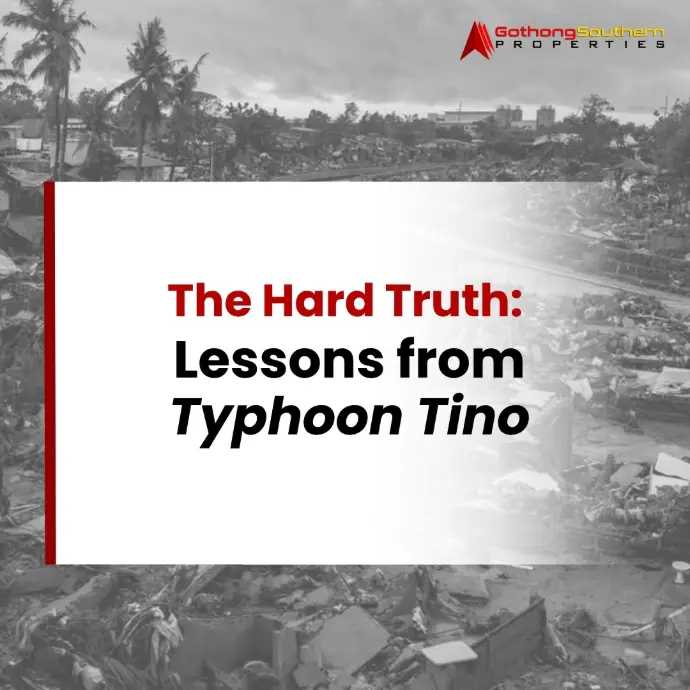
Typhoon Tino ripped through Cebu, leaving behind more than just debris and damaged homes. It exposed a terrifying vulnerability in our Cebu Real Estate landscape: 182 lives lost (as of writing), thousands were displaced, and historic landmarks and beloved neighborhoods were suddenly submerged.
The devastation was a brutal wake-up call, forcing every family and every property developer, including Gothong Southern Properties (GSP), to confront the one question that was too often ignored: "Will my family be safe here when the next, stronger typhoon strikes?"
The price tag and the amenities can no longer overshadow this fundamental safety issue. It’s time for an honest, corporate conversation about location safety, proper development, drainage, and accountability in the face of escalating climate risks.
What the Floodwaters Uncovered: A Developer's Confession
The gut-wrenching realization for many was that the areas submerged on November 4th were perfectly fine just the day before. The disaster proved, undeniably, that not all locations are equal, and we, as developers, must be honest about that truth.
Our business is building homes, but our responsibility is far greater. We must be transparent about the hazards and the factors that truly define a safe property investment in Cebu.
- Elevation is Your Non-Negotiable Shield:
That property on higher ground in Cebu City that seemed a little pricey? It's now the wisest investment. The nightmare scenario of prime waterfront properties turning into disaster zones during Tino taught us that safety cannot be compromised for a view or a lower price point.
- Drainage is NOT a feature, it's life support: Your beautiful home may have curated landscapes and complete lifestyle amenities, but if the drainage fails during a routine thunderstorm, that’s not poor planning; that's putting families in direct danger. Robust, engineered drainage systems are an absolute necessity, not an optional amenity.
- The Deception of the Catch Basin: Even an elevated property can be at extreme risk if its micro-location places it where water from surrounding areas naturally converges. This is why Gothong Southern Properties goes beyond the superficial, deeply analyzing topography and waterflow patterns to protect our homeowners, not just to impress engineers.
Redesigning Cebu: The Developer’s Mandate for Climate Resilience and Sustainable Density
The old engineering models based on historical weather data are obsolete. Rapid urbanization in Cebu has drastically reduced the natural, porous land cover, while climate change has simultaneously intensified rainfall, meaning storm systems now dump much more water in shorter periods than the drainage systems of the past were designed to handle. This dual challenge necessitates a fundamental shift in Cebu property development practices, demanding solutions that address both environmental resilience and the realities of urban population density.
At Gothong Southern Properties, our architects and planners are fully aware of Cebu's increasing population density. We recognize that sustainable development means intentionally designing spaces that serve communities for decades while minimizing their environmental footprint (ResearchGate, 2024; UN DESA, 2023).
To prevent urban flooding, developers must move beyond purely concrete solutions and embrace Sustainable Urban Drainage Systems (SUDS) and Nature-based Solutions (NBS), a principle at the core of our planned projects.
The Homebuyer's Homework: Your Essential Safety Checklist
Before you sign on the dotted line for any Cebu condominium or house and lot, you must conduct critical due diligence. Your life, and your investment, depend on it.
- Consult the NOAH Hazard Maps: Go straight to the source. The UP NOAH website provides invaluable, color-coded hazard maps detailing flood susceptibility, landslide risks, and storm surge projections. We use these maps in our site selection; if we won't build there, you shouldn't buy there.
- Monitor PAGASA Weather Data: Regular, vigilant use of the PAGASA website is non-negotiable for smart homeownership in the Philippines.
-
Visit During the Rain: You must see what happens to the property during a heavy downpour.
The Gothong Southern Commitment: Safe Vibrant Communities
Our commitment to safe and transparent development is forged by the hard lessons learned across two decades of the Gothong Southern Group's existence. Our objective is to build sustainable, technology-driven, and climate-adaptive vibrant communities that earn your trust.
Before investing in a Gothong Southern Properties property, or any other property, demand clear, technical answers to these critical questions:
- Flood Control Plan: What is the specific infrastructure (retention ponds, pipe capacity, diversion channels) in place to mitigate extreme rainfall events?
- Property Elevation: What is the average elevation, and how does it compare to historical flood levels?
- Drainage System Design: How does the on-site system integrate with local infrastructure, and what is its maximum water handling capacity?
- Historical Safety Data: What is the recorded history of flooding or landslides on or near the site?
A reputable developer in Cebu will answer candidly. If the representative hesitates, gets defensive, or dismisses your concern, that is your immediate sign to walk away.
The Future of Cebu Real Estate is Safety-Driven
The Cebu real estate market has irrevocably changed. The era of building on cheap land and hoping for the best is over. A new, higher standard is emerging, defined by superior site selection, robust drainage, transparent hazard disclosure, and climate-adaptive design.
At Gothong Southern Properties, we are building a legacy of trusted communities. Our litmus test is simple: “Would we confidently recommend this property to our own families?” Only an unequivocal “Yes” leads to a new project.
Hold every developer in Cebu to this standard. Demand evidence of flood control. Check the hazard maps. Your peace of mind in the next storm is the ultimate amenity.
Cited Sources:
- Environmental Protection Agency (EPA). (n.d.). Stormwater Best Management Practice—Permeable Pavements.
- NetZeroCities. (2023). Sustainable Urban Drainage Systems (SuDS).
- PreventionWeb (World Bank). (2022). Philippines: How nature-based solutions can help reduce flood risks.
- ResearchGate. (2024). Integrating Sustainable Urban Drainage Systems (SUDS) for Enhanced Urban Resilience and Environmental Sustainability in the Philippines.
- Susdrain. (n.d.). Sustainable drainage.
- United Nations Department of Economic and Social Affairs (UN DESA). (2023). Guide to Sustainable Urban Drainage Techniques.
by GS Properties | Nov 06, 2025 | GSP
Date of Publication: November 06, 2025
The Hard Truth: Lessons from Typhoon Tino
Ready to embark on a journey of digital transformation?
Let's turn your vision into reality. Contact us today to set your brand on the path to digital excellence with us.